The most comprehensive marketplace for data center solutions.
Company
Quick Links
Marketplace
Latest News
Sitemap
Solution
Support

Datacentermart.com. All rights reserved

Home

Community

Marketplace

Get Quote


Data centers have become the foundation of the digital economy, supporting everything from cloud computing and online banking to artificial intelligence (AI), e-commerce, and video streaming. Every digital interaction depends on the reliable operation of data centers, making them one of the most critical components of modern technology infrastructure. Over the past several decades, data centers have undergone a remarkable transformation, evolving from simple server rooms into intelligent, highly automated facilities capable of handling enormous volumes of data. This evolution has been driven by advances in computing technology, networking, virtualization, cloud services, and sustainability initiatives.
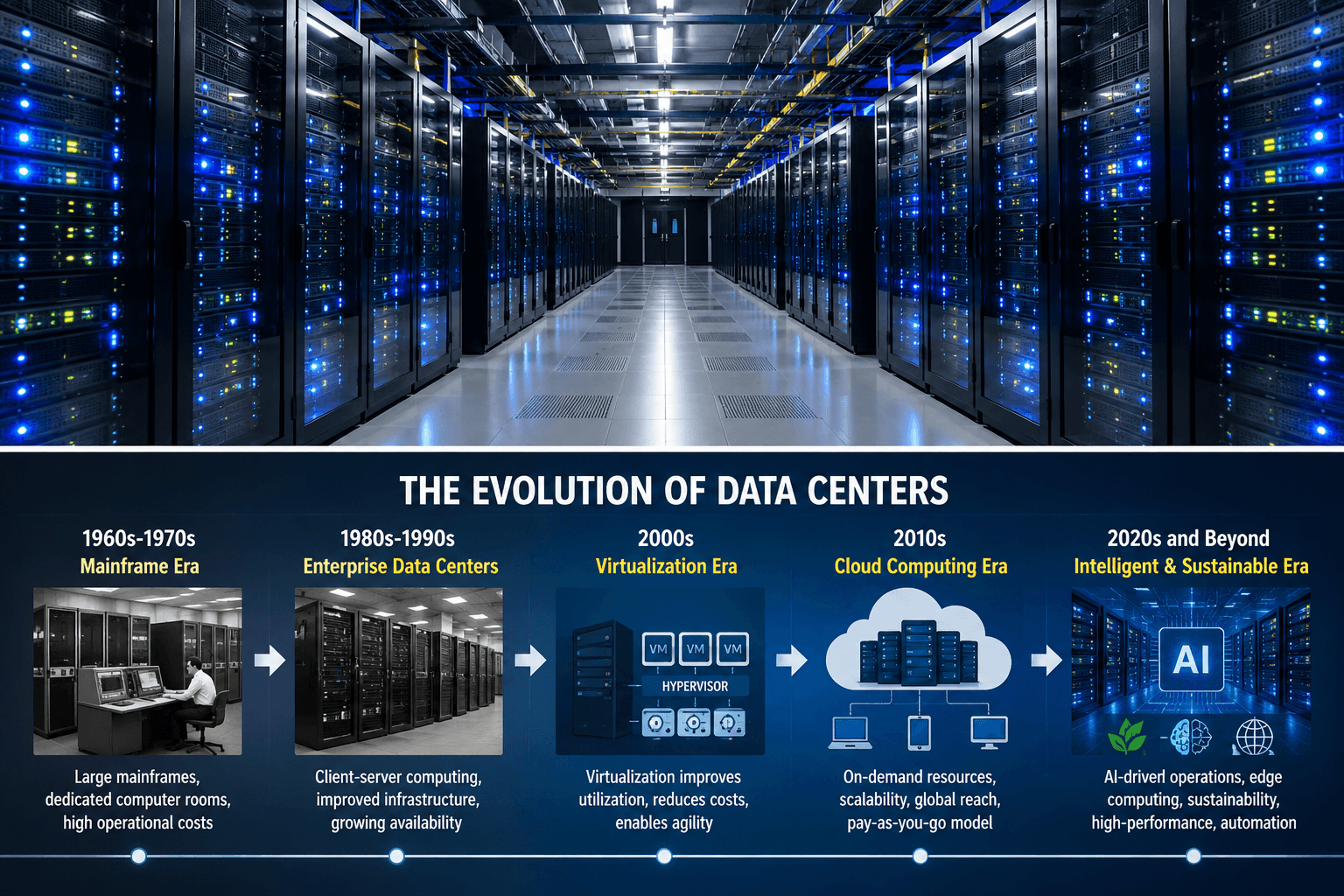
The history of data centers began during the era of mainframe computing in the 1960s and 1970s. Organizations housed large computer systems in dedicated rooms designed to maintain stable environmental conditions. These early facilities required precise temperature control, uninterrupted power supplies, and constant monitoring to ensure reliable operation. Computing resources were expensive and available only to large enterprises, government agencies, and research institutions. Managing these systems required specialized technical expertise, and even routine maintenance was a complex and time-consuming process.
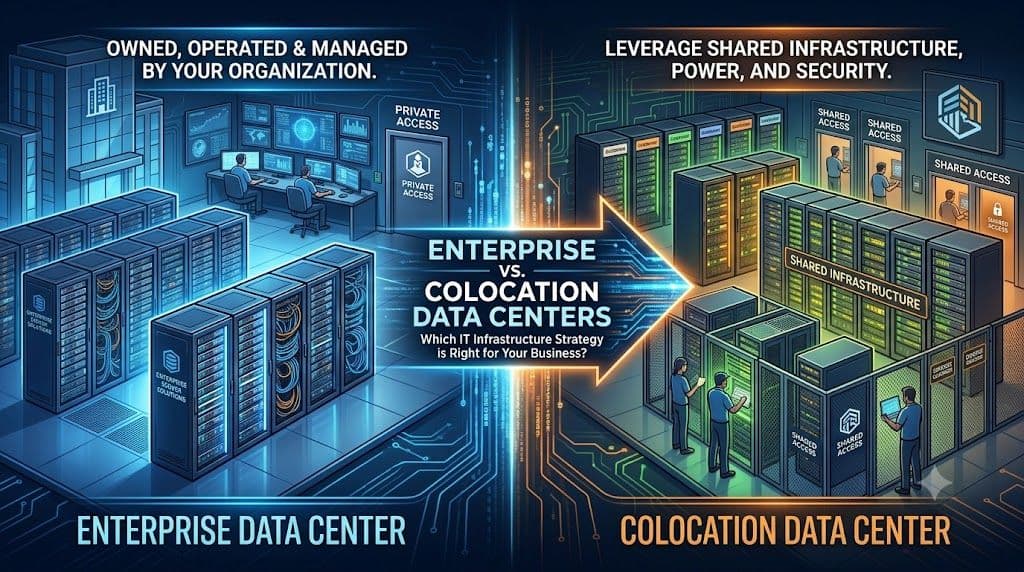
As businesses embraced digital technologies during the 1980s and 1990s, enterprise data centers became increasingly common. Organizations deployed dedicated facilities to support business applications, databases, email systems, and web services. Improvements in server hardware, networking equipment, and storage technologies allowed companies to build more reliable and scalable infrastructures. During this period, redundancy in power, cooling, and networking became standard practice, ensuring higher availability for mission-critical business operations.
virtualization marked one of the most significant milestones in the evolution of data centers. Instead of assigning one physical server to a single application, virtualization enabled multiple virtual machines to operate on the same hardware. This innovation dramatically improved resource utilization while reducing infrastructure costs and energy consumption. Organizations gained greater flexibility in deploying new applications, performing maintenance, and recovering from failures. Virtualization also simplified server management and laid the technological foundation for cloud computing.
Cloud computing fundamentally changed how organizations consume IT resources. Rather than investing in physical infrastructure, businesses began using cloud platforms to access computing power, storage, and networking services whenever needed. This shift provided greater scalability, flexibility, and cost efficiency. Companies could launch new applications within minutes instead of waiting weeks for hardware procurement and installation. Cloud computing also enabled global accessibility, allowing organizations to expand their digital services across multiple regions without maintaining physical infrastructure in every location.
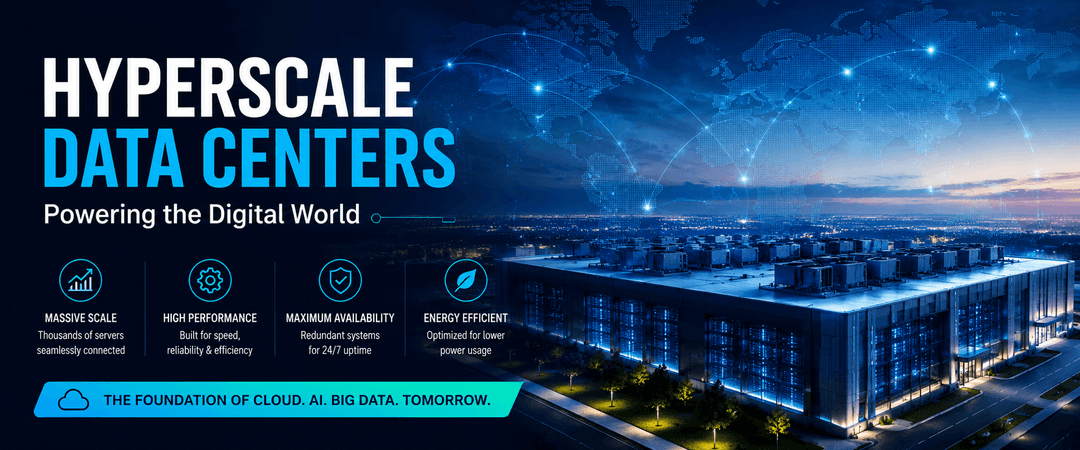
The rapid growth of cloud services, social media platforms, streaming applications, and artificial intelligence created the need for hyperscale data centers. These enormous facilities contain hundreds of thousands of servers operating together as highly efficient computing environments. Advanced automation, software-defined infrastructure, and intelligent resource management allow hyperscale data centers to deliver exceptional performance while maintaining high availability. Today, they power many of the world's largest digital platforms and provide the computational resources required for modern AI workloads and global cloud services.
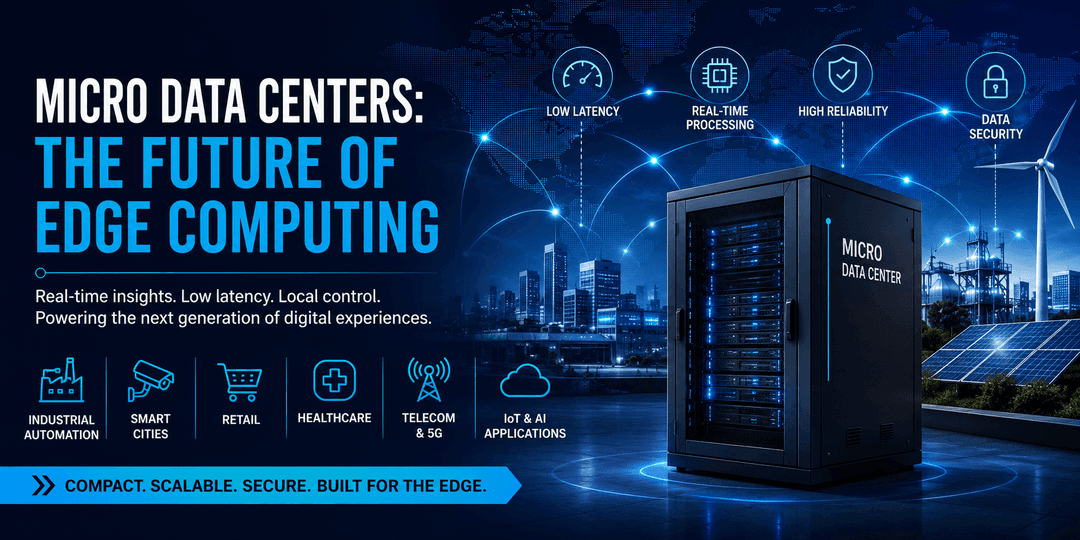
As technologies such as the Internet of Things (IoT), autonomous vehicles, and 5G networks continue to expand, processing data closer to users has become increasingly important. Edge data centers address this need by placing computing resources near the source of data generation. This reduces network latency, improves application responsiveness, and minimizes bandwidth usage. Edge computing is now essential for applications that require real-time decision-making, including industrial automation, healthcare monitoring, smart cities, and connected transportation systems.
Artificial intelligence has become a powerful tool for modern data center operations. AI-powered systems continuously monitor infrastructure performance, predict hardware failures, optimize energy consumption, and automate routine administrative tasks. Machine learning algorithms analyze vast amounts of operational data to improve workload distribution, cooling efficiency, and cybersecurity. As AI technologies continue to advance, data centers are becoming increasingly autonomous, allowing operators to improve reliability while reducing operational costs.
With growing concerns about energy consumption and environmental impact, sustainability has become a major focus for data center operators worldwide. Organizations are investing in renewable energy sources, advanced cooling technologies, and energy-efficient hardware to reduce carbon emissions. Liquid cooling, free-air cooling, intelligent power management, and waste heat recovery are helping create greener facilities without compromising performance. Sustainable infrastructure has become a key factor in meeting both business objectives and environmental responsibilities.
The next generation of data centers will be shaped by innovations such as quantum computing, photonic networking, autonomous infrastructure management, digital twins, and AI-native architectures. These technologies will enable faster processing, improved energy efficiency, and greater operational intelligence. Future data centers will become increasingly modular, automated, and resilient, supporting the growing demands of artificial intelligence, edge computing, cloud services, and emerging digital technologies.
The evolution of data centers reflects the continuous advancement of technology and the increasing demand for reliable digital infrastructure. From the large mainframe systems of the past to today's AI-powered hyperscale facilities, data centers have transformed into intelligent ecosystems that power nearly every aspect of modern life. As businesses continue their digital transformation journeys, data centers will remain at the heart of innovation, enabling organizations to deliver secure, scalable, and high-performance services while embracing sustainability and preparing for the technologies of tomorrow.