The most comprehensive marketplace for data center solutions.
Company
Quick Links
Marketplace
Latest News
Sitemap
Solution
Support

Datacentermart.com. All rights reserved

Home

Community

Marketplace

Get Quote


The rapid growth of cloud computing, artificial intelligence (AI), big data analytics, video streaming, and online collaboration has transformed the way businesses manage IT infrastructure. Behind these digital services are hyperscale data centers—massive, highly efficient facilities designed to handle enormous computing workloads while supporting millions of users worldwide.Unlike traditional enterprise data centers, hyperscale facilities are built for scalability, automation, and energy efficiency. They allow organizations to expand computing, storage, and networking resources quickly without disrupting operations. As businesses continue to embrace digital transformation, hyperscale data centers have become the foundation of modern cloud services and global internet platforms.
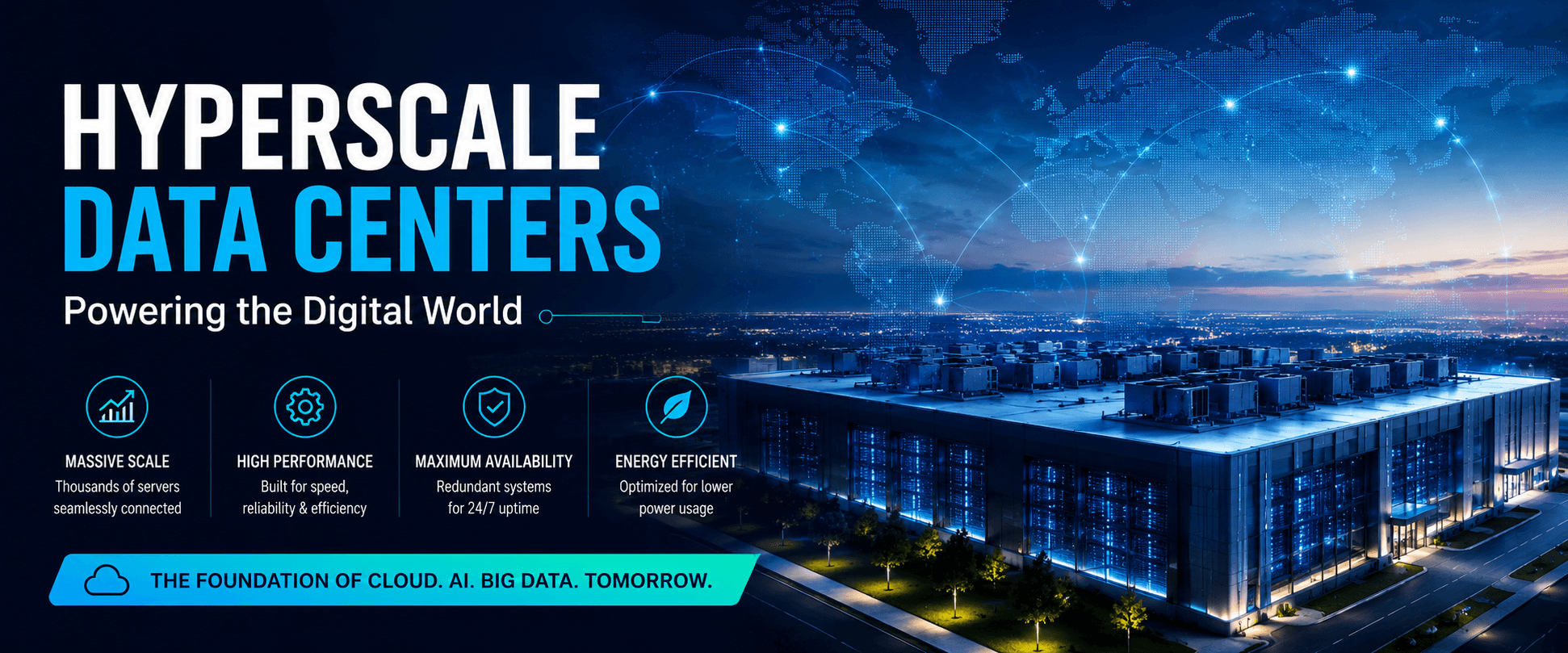
One of the defining features of a hyperscale data center is its ability to grow rapidly. Additional servers, storage systems, and networking equipment can be deployed without major infrastructure redesigns, ensuring the environment keeps pace with business growth.Automation plays a critical role in managing these large-scale environments. Tasks such as workload provisioning, monitoring, software deployment, and infrastructure maintenance are performed automatically, reducing manual intervention and minimizing operational errors.Hyperscale facilities are also built with redundancy at every level. Multiple power supplies, backup generators, redundant cooling systems, and diverse network connections help maintain uninterrupted service even during hardware failures or maintenance activities.Energy efficiency is another major characteristic. Modern hyperscale operators use advanced cooling technologies, intelligent power management systems, and renewable energy sources to reduce operational costs while minimizing environmental impact.
Hyperscale data centers operate by distributing workloads across a vast network of servers. Rather than relying on a single powerful machine, applications run on clusters of servers that share computing tasks. If one server experiences a failure, workloads are automatically shifted to healthy systems, ensuring continuous availability.Virtualization and container technologies maximize hardware utilization by allowing multiple applications to run efficiently on shared infrastructure. Software-defined networking enables dynamic traffic routing, while distributed storage systems ensure data remains accessible even if individual storage devices fail.Automation platforms continuously monitor infrastructure health, optimize resource allocation, and respond to changing workload demands in real time. This intelligent orchestration enables hyperscale facilities to maintain exceptional performance while supporting millions of simultaneous users.
Hyperscale data centers provide exceptional scalability, allowing businesses to expand IT resources as demand grows without investing in entirely new facilities. This flexibility supports business growth while reducing infrastructure complexity.Operational efficiency is significantly improved through automation and standardized hardware, enabling faster deployments and simplified management. Organizations can deliver new services more quickly while reducing administrative overhead.High availability is another major advantage. Redundant infrastructure and automated failover mechanisms minimize downtime, making hyperscale facilities ideal for mission-critical applications and cloud platforms.Cost efficiency improves over time because resources are utilized more effectively, energy consumption is optimized, and hardware can be deployed in large volumes using standardized designs.These facilities also support advanced technologies such as artificial intelligence, machine learning, high-performance computing, and large-scale data analytics, enabling organizations to process enormous datasets with high performance.
Despite their many advantages, hyperscale data centers present several challenges. Building these facilities requires substantial capital investment in land, power infrastructure, networking equipment, and cooling systems.Power consumption remains one of the industry's biggest concerns. Even with highly efficient designs, hyperscale facilities consume significant amounts of electricity, requiring continuous investment in renewable energy and sustainable operations.Security is another critical consideration. Protecting vast amounts of sensitive data requires comprehensive physical security, advanced cybersecurity solutions, continuous monitoring, and strict compliance with international standards.Managing thousands of servers also demands highly skilled engineers, automated monitoring tools, and sophisticated infrastructure management platforms to ensure reliable operations.
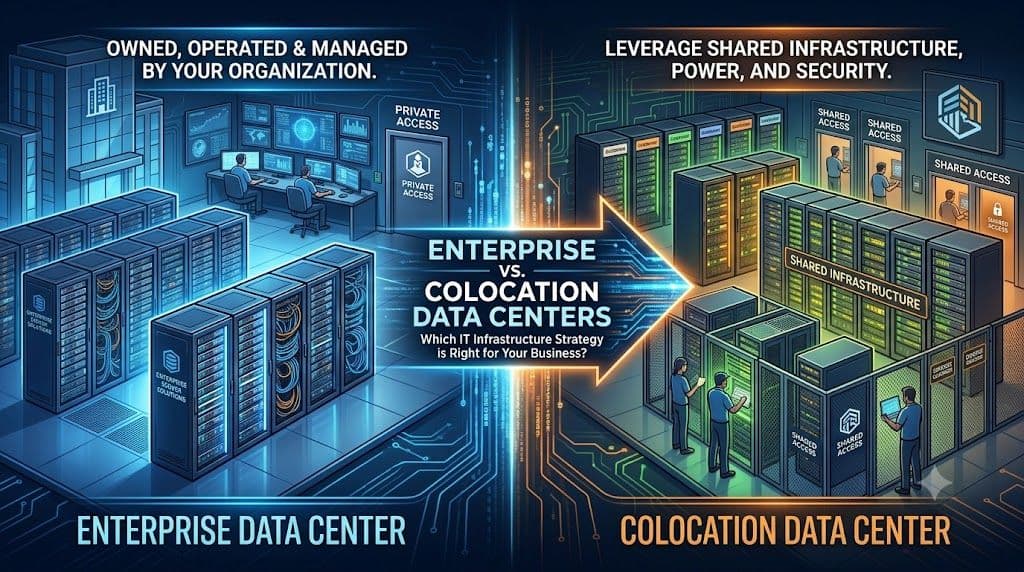
Traditional enterprise data centers are typically designed to support the IT needs of a single organization and have limited capacity for rapid expansion. Scaling often requires purchasing additional hardware and performing manual configuration.Hyperscale data centers, on the other hand, are built specifically for continuous growth. They use modular architecture, software-defined infrastructure, and automation to support massive workloads while maintaining consistent performance. Their ability to scale efficiently makes them the preferred choice for cloud providers, streaming platforms, and AI services.
Cloud service providers use hyperscale facilities to deliver virtual machines, storage services, databases, and enterprise applications to customers worldwide.Artificial intelligence companies depend on hyperscale infrastructure to train large language models, process complex algorithms, and perform high-performance computing.Streaming platforms use these data centers to deliver video and music content to millions of users simultaneously with minimal latency.E-commerce businesses rely on hyperscale environments to handle seasonal traffic spikes, secure payment processing, inventory management, and customer analytics.Financial institutions leverage hyperscale infrastructure for real-time transaction processing, fraud detection, and regulatory compliance.
The future of hyperscale data centers will be shaped by AI-driven infrastructure management, liquid cooling technologies, renewable energy integration, edge computing, and increasingly efficient hardware architectures. As digital services continue to expand, these facilities will become even more intelligent, sustainable, and capable of supporting next-generation technologies such as autonomous systems, immersive virtual experiences, and advanced scientific research.Organizations are also investing in carbon-neutral operations by adopting solar, wind, and other renewable energy sources while improving cooling efficiency and reducing overall environmental impact.
Hyperscale data centers have become the backbone of today's digital economy. Their ability to deliver massive scalability, exceptional reliability, and high operational efficiency enables cloud computing, AI, streaming services, and global online platforms to operate at unprecedented scale. As technology continues to evolve, hyperscale facilities will remain essential for supporting the world's growing demand for computing power, storage, and connectivity. Businesses that understand and leverage hyperscale infrastructure will be better positioned to innovate, scale rapidly, and compete in an increasingly digital future.