The most comprehensive marketplace for data center solutions.
Company
Quick Links
Marketplace
Latest News
Sitemap
Solution
Support

Datacentermart.com. All rights reserved

Home

Community

Marketplace

Get Quote


As businesses generate more data than ever before, the need to process information closer to where it is created has become increasingly important. Traditional centralized data centers are highly capable, but they can introduce latency when handling real-time applications. This challenge has driven the adoption of edge computing, where data is processed near its source rather than being sent to a distant cloud facility.Micro data centers play a vital role in this transformation. These compact, self-contained computing facilities bring enterprise-grade IT infrastructure to the network edge, enabling faster data processing, reduced latency, and improved reliability. From smart cities and manufacturing plants to retail stores and healthcare facilities, micro data centers are helping organizations meet the growing demands of modern digital applications.
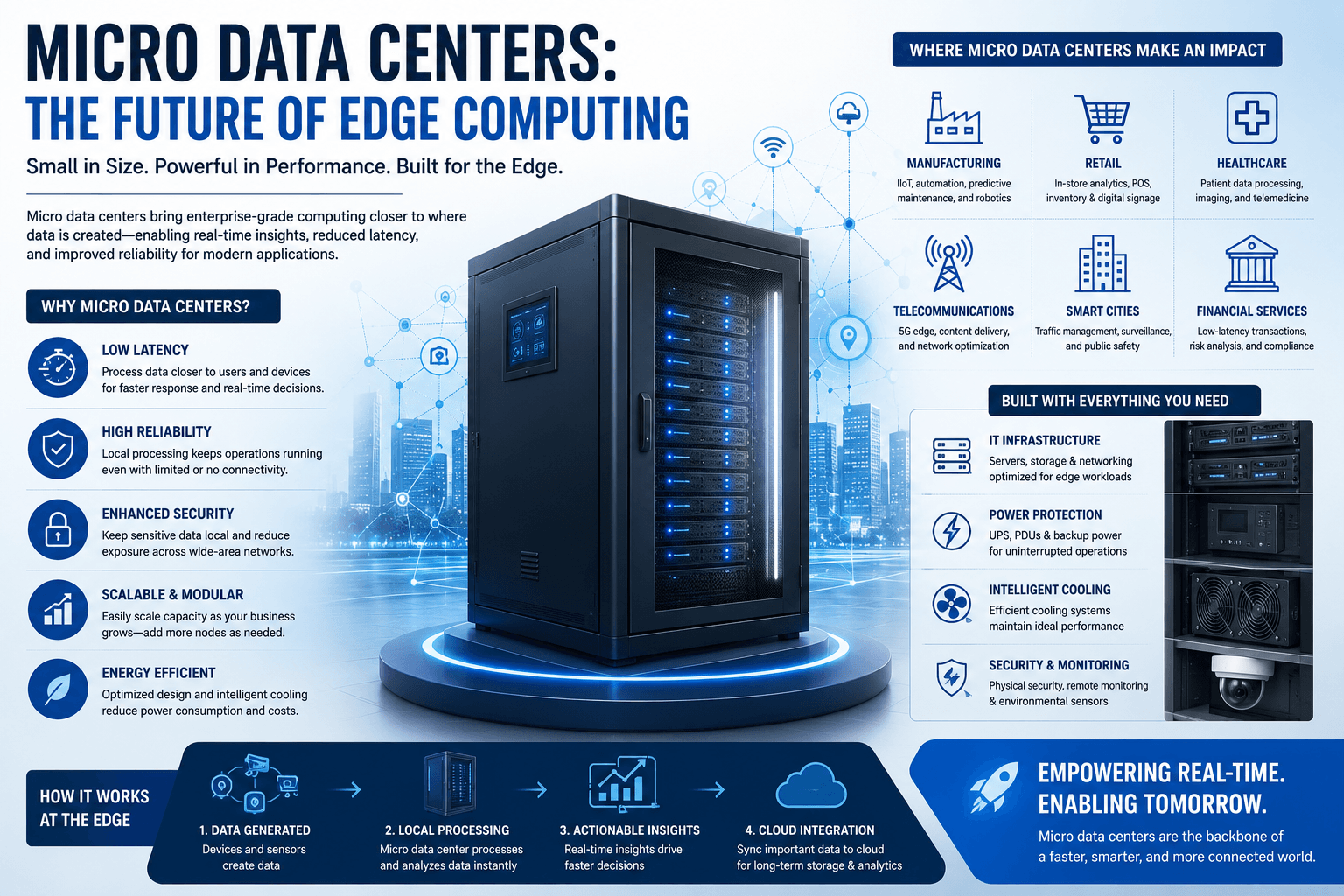
A micro data center is a compact, integrated IT infrastructure solution that combines servers, storage, networking, power distribution, cooling, and security into a single enclosure. Unlike traditional data centers that occupy large facilities, micro data centers can be deployed in small spaces such as branch offices, factory floors, retail locations, or remote sites.These systems are designed for rapid deployment and can operate independently or as an extension of a larger data center or cloud environment. Their modular architecture allows organizations to scale computing resources as business requirements evolve.
Edge computing moves data processing closer to users, devices, and applications instead of relying solely on centralized cloud infrastructure. Micro data centers provide the local computing power required to analyze and process data in real time.For example, an autonomous manufacturing system cannot afford delays while waiting for data to travel hundreds of miles to a cloud data center. A micro data center located within the facility processes sensor data instantly, enabling machines to respond immediately to changing conditions.Similarly, retail stores can analyze customer behavior, manage inventory, and process digital payments locally, improving both operational efficiency and customer experience.
A micro data center integrates several essential infrastructure components into a compact solution. High-performance servers provide computing resources, while storage systems securely manage business-critical data. Networking equipment ensures reliable connectivity between devices, applications, and cloud platforms.Power distribution units and uninterruptible power supplies (UPS) maintain continuous operation during power interruptions. Built-in cooling systems regulate temperatures to protect hardware from overheating, while physical security features such as locking cabinets, access controls, and environmental monitoring help safeguard valuable IT assets.Remote monitoring software enables administrators to oversee system health, receive alerts, and perform maintenance from virtually anywhere.
One of the biggest advantages of micro data centers is significantly reduced latency. By processing data closer to end users and connected devices, organizations can support applications that require immediate responses, such as industrial automation, video analytics, and autonomous systems.Micro data centers also improve reliability by allowing critical applications to continue operating even if connectivity to a central cloud environment is temporarily unavailable. This local resilience minimizes downtime and helps maintain business continuity.Deployment is faster compared to building traditional data centers. Since these systems arrive as pre-integrated solutions, installation requires less time and fewer infrastructure modifications.Their modular design also makes future expansion easier. Organizations can add additional micro data centers as workloads grow without investing in an entirely new facility.Energy efficiency is another important benefit. Because they are purpose-built for specific workloads, micro data centers often consume less power than oversized centralized infrastructure while delivering optimal performance.
Manufacturing companies use micro data centers to support Industrial Internet of Things (IIoT) devices, robotics, predictive maintenance, and production monitoring.Healthcare organizations deploy them to process medical imaging, patient monitoring systems, and electronic health records with minimal delay while maintaining regulatory compliance.Retail businesses rely on micro data centers for point-of-sale systems, inventory tracking, customer analytics, and digital signage management.Telecommunications providers install them at network edge locations to support 5G infrastructure, content delivery, and low-latency services.Financial institutions use micro data centers to process transactions securely and reduce response times for digital banking applications.Smart cities benefit from local processing of traffic management systems, surveillance cameras, environmental sensors, and public safety applications.
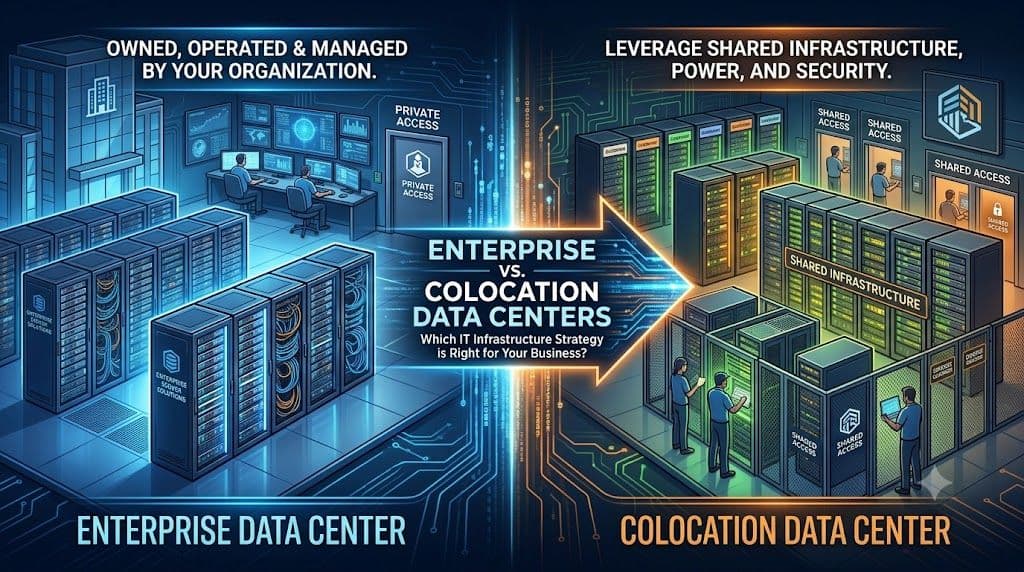
Traditional data centers are centralized facilities designed to support a broad range of enterprise workloads and large-scale cloud services. While they offer enormous computing capacity, they may introduce latency for applications that require immediate processing.Micro data centers focus on localized computing. They provide dedicated resources closer to end users, improving application performance and reducing dependency on distant cloud infrastructure. Rather than replacing traditional data centers, they complement them by extending computing capabilities to the network edge.
Although micro data centers offer many advantages, organizations should carefully plan their deployment. Remote locations may require additional physical security measures to protect equipment from unauthorized access or environmental risks.Power availability and cooling capacity must also be considered, particularly in harsh industrial or outdoor environments.Managing multiple distributed micro data centers can become complex without centralized monitoring and automation tools. Standardized deployment practices and remote management platforms help simplify administration and improve operational efficiency.
The rapid expansion of 5G networks, artificial intelligence, machine learning, and Internet of Things (IoT) technologies will continue driving demand for micro data centers. Future deployments will feature greater automation, AI-powered infrastructure management, advanced liquid cooling systems, and improved energy efficiency.As organizations adopt hybrid cloud strategies, micro data centers will become essential components of distributed IT architectures, enabling seamless integration between on-premises infrastructure, edge locations, and public cloud platforms.Sustainability will also play an increasingly important role, with vendors focusing on energy-efficient hardware, renewable power integration, and intelligent resource optimization to reduce environmental impact.
Micro data centers are transforming how organizations process and manage data at the network edge. By bringing computing resources closer to users and connected devices, they deliver lower latency, improved reliability, enhanced security, and greater operational flexibility. As edge computing continues to expand across industries, micro data centers will become a critical part of modern IT infrastructure, helping businesses support real-time applications, optimize performance, and prepare for the next generation of digital innovation.