The most comprehensive marketplace for data center solutions.
Company
Quick Links
Marketplace
Latest News
Sitemap
Solution
Support

Datacentermart.com. All rights reserved

Home

Community

Marketplace

Get Quote


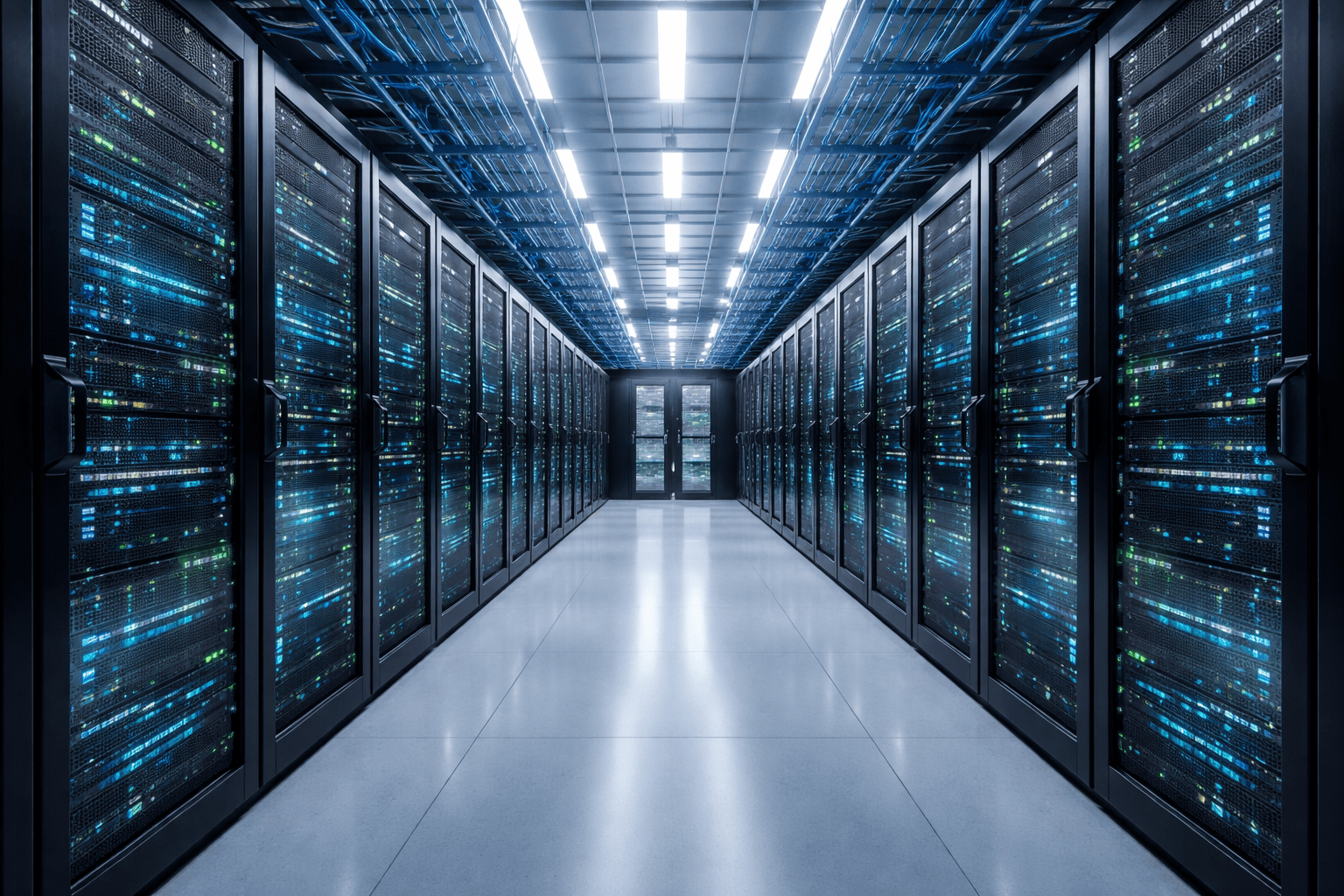
In today’s digital economy, a data center serves as the backbone of modern business operations, supporting everything from online transactions and enterprise applications to streaming services and cloud platforms. A data center is a specialized facility designed to house servers, storage systems, networking devices, and security infrastructure in a controlled environment that ensures continuous availability and optimal performance. Organizations rely on a data center to store, process, and manage vast amounts of information securely while maintaining high uptime. As digital transformation accelerates, the need for a scalable and resilient data center strategy becomes increasingly important for companies of all sizes.
A modern data center includes powerful servers that run applications and process workloads, advanced storage systems that manage structured and unstructured data, and high-speed networking equipment that ensures seamless connectivity. Reliable power supplies, backup generators, and precision cooling systems protect equipment from outages and overheating. Security is another fundamental component of a data center, involving biometric access controls, surveillance systems, firewalls, and intrusion detection mechanisms. These integrated systems ensure that the data center operates efficiently while safeguarding critical business information from physical and cyber threats.
Many organizations choose colocation as a cost-effective alternative to building and maintaining their own facilities. Through colocation, businesses place their servers and IT equipment inside a professionally managed data center while retaining control over their hardware. Colocation allows companies to benefit from enterprise-grade infrastructure, redundant power systems, and enhanced security without the high capital expenditure required for private facilities. By leveraging colocation, businesses can scale their operations easily, improve reliability, and focus more on innovation rather than infrastructure management. The growing adoption of colocation highlights its importance in modern data center planning.
The rise of cloud computing has significantly transformed how organizations utilize a data center. Instead of relying solely on physical hardware, companies can access computing resources, storage, and applications through cloud computing platforms on demand. A modern data center often integrates with cloud computing environments to create hybrid architectures that combine on-premise systems with virtual infrastructure. Cloud computing provides flexibility, rapid scalability, and cost efficiency, enabling businesses to deploy applications globally and handle fluctuating workloads effectively. The combination of data center facilities, colocation services, and cloud computing solutions creates a dynamic IT ecosystem that supports growth and innovation.
A reliable data center ensures business continuity and minimizes downtime, which can otherwise lead to financial loss and reputational damage. Colocation providers typically offer high uptime guarantees, making colocation an attractive solution for mission-critical workloads. At the same time, cloud computing enhances operational agility by supporting remote access, disaster recovery, and global collaboration. By combining colocation and cloud computing within a secure data center framework, organizations achieve improved performance, scalability, and resilience in an increasingly competitive digital landscape.
Sustainability is becoming a major focus within the data center industry as operators aim to reduce energy consumption and environmental impact. Energy-efficient cooling systems, renewable power sources, and intelligent monitoring technologies are being widely adopted. Colocation providers and cloud computing companies alike are investing in green initiatives to optimize resource usage while maintaining performance standards. Looking ahead, advancements in artificial intelligence, edge computing, and automation will further enhance data center capabilities. As businesses continue to embrace digital transformation, the strategic importance of a robust data center supported by colocation and cloud computing will only continue to grow.
A well-planned data center must include strong disaster recovery and backup strategies to protect business operations from unexpected failures. Natural disasters, cyberattacks, hardware failures, or power outages can disrupt services, so organizations implement backup systems and replication technologies to ensure data is never lost. Many companies use geographically separate data center locations to store copies of critical data. Colocation facilities often provide disaster recovery support by offering redundant infrastructure in multiple regions. Additionally, cloud computing plays a major role in backup strategies by enabling automated data replication and quick recovery options, ensuring minimal downtime during emergencies.
High-speed and reliable connectivity is essential for every data center. Network infrastructure includes fiber-optic links, redundant internet service providers, and advanced routing systems to maintain continuous communication. Colocation providers typically offer multiple carrier options to ensure businesses have flexible and reliable connectivity. Cloud computing integration further enhances performance by allowing data center environments to distribute workloads efficiently across regions. Optimized networking ensures low latency, faster application response times, and improved user experience for customers worldwide.
What is a data center?
A data center is a secure facility that houses servers, storage systems, and networking equipment used to store, process, and manage data for businesses and organizations.
Why is a data center important for businesses?
A data center ensures continuous availability of applications and data, reduces downtime, enhances security, and supports business growth in a digital environment.
What is colocation in a data center?
Colocation is a service where businesses place their own servers and hardware inside a third-party data center facility. The provider manages power, cooling, and security, while the company manages its own equipment.
How does cloud computing relate to a data center?
Cloud computing uses data center infrastructure to deliver computing resources such as storage, servers, and applications over the internet on demand.