The most comprehensive marketplace for data center solutions.
Company
Quick Links
Marketplace
Latest News
Sitemap
Solution
Support

Datacentermart.com. All rights reserved

Home

Community

Marketplace

Get Quote


Autonomous Data Centers represent the next evolution of digital infrastructure, combining artificial intelligence, automation, and advanced analytics to manage data center operations with minimal human intervention. As organizations across the USA accelerate digital transformation, traditional data centers struggle to keep pace with rising workloads, energy demands, and uptime expectations. Autonomous data centers address these challenges by enabling self-managing, self-optimizing, and self-healing environments.
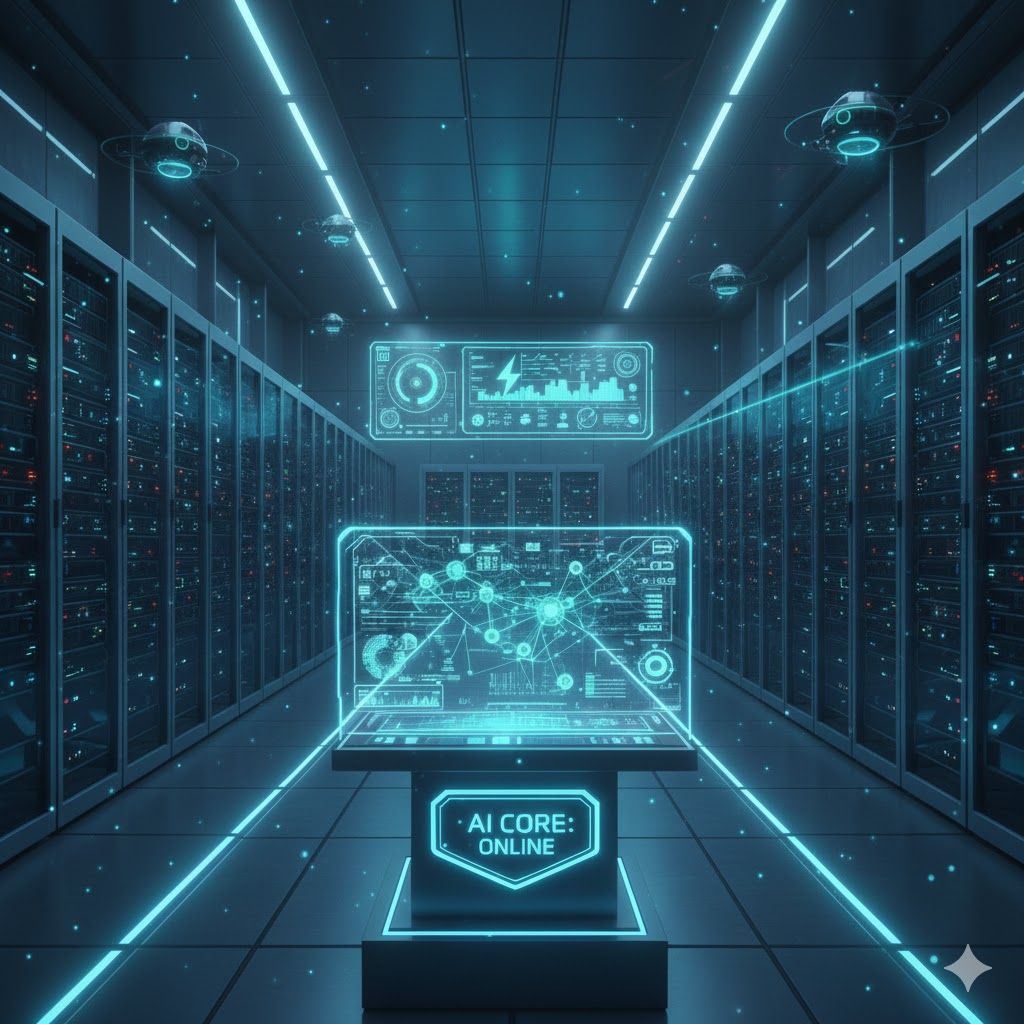
Modern data centers form the backbone of cloud computing, financial systems, healthcare platforms, and e-commerce ecosystems. You can learn more about the fundamentals of a data center and its role in digital infrastructure. By embedding intelligence directly into infrastructure and operations, autonomous data centers improve efficiency, reduce risks, and support long-term scalability for enterprises.Understanding when and why organizations should adopt autonomous data centers is critical for staying competitive in an increasingly data-driven economy.
Autonomous data centers use AI-driven data center operations to monitor, analyze, and control infrastructure components such as servers, storage, networks, power, and cooling systems. Instead of relying solely on manual oversight, these environments continuously learn from operational data and make decisions in real time.
At the core of autonomous data centers is self-healing infrastructure, which detects anomalies, predicts failures, and automatically applies corrective actions. This capability minimizes downtime, enhances reliability, and reduces dependence on human intervention. By integrating automation with predictive intelligence, organizations gain greater control over complex environments while lowering operational costs.
Autonomous data centers are defined by several core capabilities that distinguish them from traditional and partially automated facilities.
AI-driven data center operations continuously collect telemetry from hardware, applications, and facility systems. These insights help identify patterns, detect inefficiencies, and recommend or execute optimization actions. By correlating data across multiple layers, autonomous data centers make informed decisions faster than manual processes
Self-healing infrastructure enables predictive maintenance by identifying early warning signs of failure. Instead of reacting to outages, systems automatically reroute workloads, adjust configurations, or trigger maintenance workflows. This proactive approach improves uptime and protects mission-critical applications.
Autonomous data centers dynamically allocate compute, storage, and network resources based on real-time demand. AI-driven optimization ensures workloads run efficiently while minimizing energy consumption and waste
Many enterprises delay modernization until operational challenges become severe. The following situations indicate the right time to transition toward autonomous data centers.
Increasing power and cooling expenses often signal inefficiencies in traditional environments. Autonomous data centers analyze energy usage patterns and automatically optimize airflow, cooling strategies, and workload placement. These improvements help organizations reduce costs while maintaining performance.
Repeated outages, latency issues, or unstable applications suggest deeper infrastructure problems. AI-driven data center operations identify root causes and apply corrective actions before issues escalate, protecting customer trust and revenue.
As hybrid and multi-cloud adoption grows, managing complexity becomes increasingly difficult. Autonomous data centers simplify operations by providing centralized intelligence and automation across on-premises and cloud environments.
Artificial intelligence is the foundation of autonomous data centers. AI models learn normal operating behavior by analyzing historical and real-time data from thousands of data points across infrastructure layers.
These insights enable predictive analytics, anomaly detection, and intelligent automation. With self-healing infrastructure, systems can resolve issues such as server overloads, network congestion, or cooling inefficiencies without human intervention. Over time, AI-driven data center operations continuously improve accuracy and decision-making, delivering smarter and more resilient environments.
https://www.nlyte.com/blog/the-autonomous-data-center-ais-vision-for-the-future-of-infrastructure/
Autonomous data centers offer tangible advantages for organizations operating in the USA’s competitive digital landscape.First, they significantly reduce operational risks by minimizing human error and improving system reliability. Second, they enhance cost efficiency through intelligent energy management and optimized resource utilization. Third, autonomous data centers support compliance and governance requirements by maintaining consistent operational standards and detailed audit trails.Industries such as finance, healthcare, retail, telecommunications, and government benefit from the scalability and resilience enabled by AI-driven data center operations.
Many internal IT teams are skilled at managing daily operations but lack specialized expertise in advanced automation, AI modeling, or large-scale optimization. Autonomous data centers reduce this burden by embedding intelligence directly into infrastructure.By leveraging self-healing infrastructure, organizations rely less on manual troubleshooting and reactive maintenance. This shift allows IT teams to focus on strategic initiatives, innovation, and business alignment rather than constant firefighting
The adoption of autonomous data centers in the USA is expected to accelerate as AI capabilities mature and infrastructure complexity increases. Future developments will include deeper integration with cloud-native platforms, enhanced sustainability features, and fully autonomous decision-making across distributed environments.
As regulatory pressures and uptime expectations grow, AI-driven data center operations will become a standard requirement rather than a competitive advantage. Organizations that invest early will be better positioned to scale securely and efficiently.
Autonomous data centers are gaining traction across multiple sectors. Cloud service providers use automation to manage massive, distributed infrastructures. Financial institutions rely on self-healing infrastructure to maintain uptime and meet strict compliance standards. Healthcare organizations depend on resilient systems for critical patient data, while e-commerce platforms leverage AI-driven data center operations to handle seasonal traffic surges.Telecommunications, media, and government agencies also benefit from improved efficiency, resilience, and visibility.
What are autonomous data centers?
Autonomous data centers use AI, automation, and analytics to manage operations with minimal human intervention.
How do autonomous data centers reduce downtime?
They rely on self-healing infrastructure to detect issues early and apply corrective actions automatically.
Are autonomous data centers suitable for small organizations?
Yes. Autonomous technologies can scale to support both small and large environments.
Do autonomous data centers reduce costs?
Yes. Optimized energy usage, predictive maintenance, and automated operations lower overall expenses.
Is AI-driven data center operations secure?
When properly implemented, AI platforms follow strict security and compliance standards.